Emergency Medicine III
Trauma, Abdominal And Neurological Emergencies
Principal Course Master(s):
Course Master(s):
Instructor(s):
Important notes and requirements
Completion of Emergency Medicine I or the previous Emergency & Critical Care I course is required before attending Emergency Medicine II, III, or IV.
Course Overview
This module provides advanced postgraduate training in the recognition, diagnosis, stabilization, and management of abdominal, traumatic, and neurological emergencies in small animal patients. Emphasis is placed on emergency diagnostic work-up, imaging interpretation, trauma stabilization, neurological assessment, and evidence-based emergency decision-making in critically ill patients.
Indicative Content
Abdominal Emergencies
- Identification and diagnostic approach to the patient with an acute abdomen
- Abdominal radiography:
- A-FAST examination including practical laboratory
- Gastric dilatation-volvulus stabilization and post op treatment
- Hemoabdomen diagnosis, causes, stabilization and treatment
- Monitoring of the patient with traumatic hemoabdomen
- Clinical approach to sepsis definition, identification and stabilization
- Case-based discussion of septic peritonitis
- Uroabdomen identification and emergency stabilization
- Acute hemorrhagic diarrhea syndrome
- Case-based discussion of obstructive ileus
Trauma Emergencies
- Principles of trauma management
- Approach to thoracic trauma
- Pulmonary contusions
- Pneumothorax and pneumomediastinum
- Flail chest
- Diaphragmatic hernia
- Abdominal trauma
- Pathophysiology of traumatic brain injury and stabilization
Neurological Emergencies
- Neurological examination of the emergency patient
- Neuroanatomical localization
- Central and peripheral causes of paralysis
- Management of status epilepticus
- Identification, causes and management of meningitis
- Case-based discussion of tetanus
Learning Outcomes
Knowledge and Understanding
Upon successful completion of this module, participants will be able to:
- Describe the pathophysiology underlying abdominal, traumatic, and neurological emergencies in small animal patients.
- Outline the key diagnostic and stabilization priorities in patients presenting with acute abdomen, trauma, and neurological dysfunction.
- Identify and describe key findings obtained from abdominal radiographs, A-FAST examinations, fluid analysis, and neurological examination findings.
- Explain the principles of sepsis recognition, trauma stabilization, neuroanatomical localization, and emergency management of neurologic disorders.
- List the indications, contraindications, complications, and prognostic considerations associated with emergency interventions in abdominal, thoracic, and neurologic emergencies.
- State the classification and pathophysiology of traumatic brain injury and recall the principles of neuroprotective stabilization in the emergency patient.
- Name the common causes, clinical signs, and initial diagnostic approach relevant to uroabdomen, hemoabdomen, and gastric dilatation-volvulus in dogs and cats.
Clinical and Technical Skills
Upon successful completion of this module, participants will be able to:
- Perform systematic emergency assessment and stabilization of patients with abdominal, traumatic, and neurological emergencies.
- Conduct emergency diagnostic work-up including A-FAST examination, abdominal fluid evaluation, and interpretation of abdominal radiographs.
- Apply evidence-based stabilization strategies for trauma patients including management of thoracic, abdominal, and head trauma.
- Perform structured neurological examination and neuroanatomical localization in emergency patients presenting with paresis, paralysis, or seizures.
- Formulate emergency treatment plans for conditions including gastric dilatation-volvulus, septic abdomen, status epilepticus, meningitis, and tetanus.
- Assess and triage the multi-trauma patient using a primary and secondary survey, identifying and prioritizing immediately life-threatening injuries.
- Diagnose and manage status epilepticus in the emergency setting, selecting appropriate anticonvulsant protocols and monitoring for complications.
Professional Competencies and Clinical Decision-Making
Upon successful completion of this module, participants will be able to:
- Prioritize emergency interventions using structured clinical reasoning in rapidly evolving trauma, abdominal, and neurological emergencies.
- Integrate imaging findings, laboratory data, and clinical examination results into dynamic emergency management plans.
- Communicate effectively with veterinary team members during emergency stabilization, diagnostic procedures, and case management.
- Apply principles of patient safety, infection control, analgesia, and professional responsibility during emergency interventions.
- Critically evaluate emergency case outcomes and identify opportunities for quality improvement and continuing professional development.
- Plan and coordinate perioperative care for trauma and abdominal surgery patients, adapting analgesic and monitoring protocols based on patient status and operative findings.
- Manage the ethical and welfare dimensions of neurological emergency patients with a guarded prognosis, communicating transparently with owners and the wider veterinary team.
Learning and Teaching Strategy
The module combines:
- Specialist-led lectures
- Interactive case-based learning
- Imaging interpretation workshops
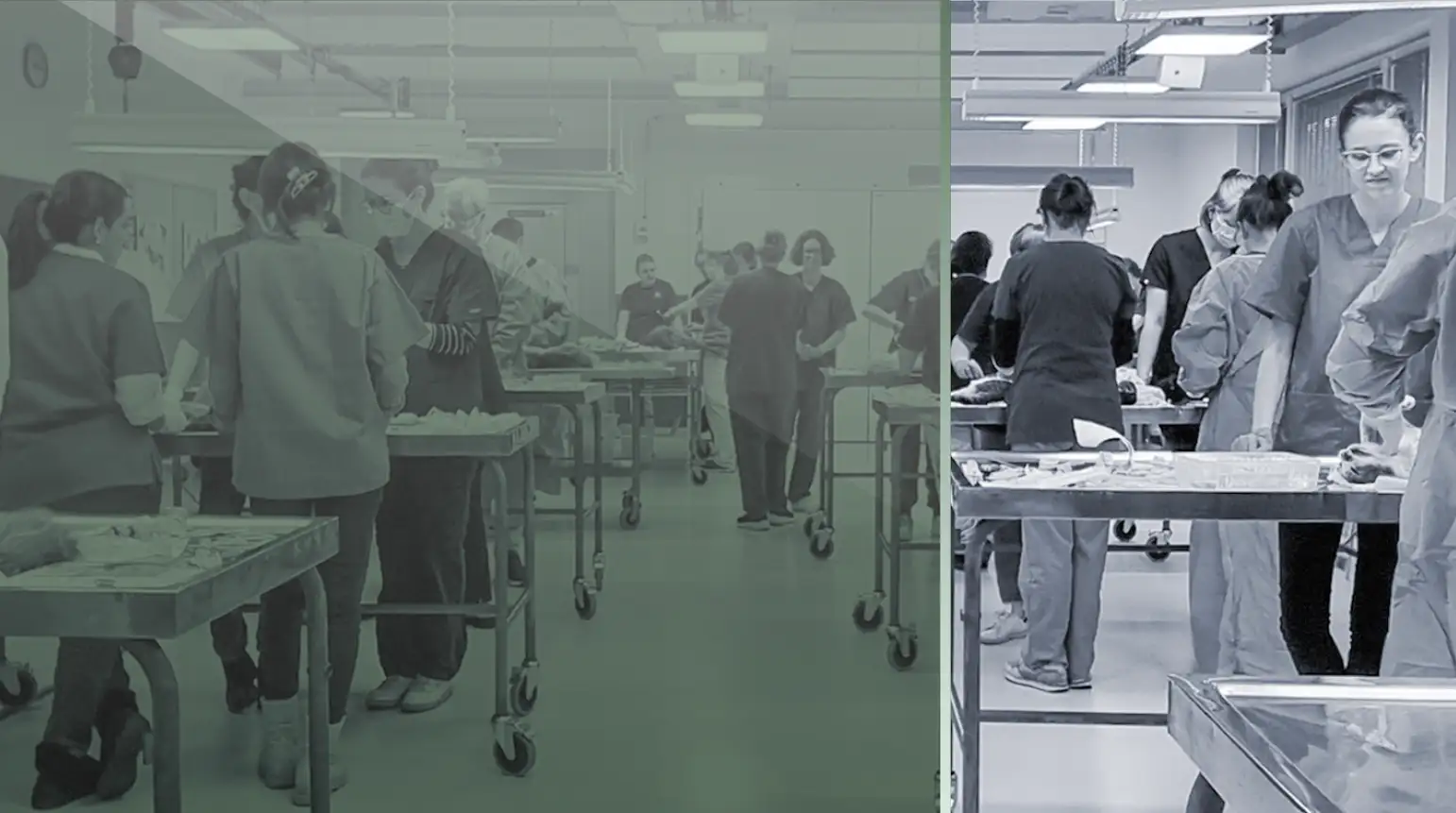
- Practical A-FAST laboratories
- Dry laboratory procedural exercises
- Neurological examination training
- Small-group clinical reasoning sessions
- Simulation-based emergency training
The course emphasizes integration of theoretical knowledge with practical emergency management and specialist-level clinical reasoning.
Course Program (Subject to change)
Monday, 5 July 2027
08:45 – 09:00 Introduction and welcome – Sigrist
09:00 – 10:00 Acute abdomen diagnostic workup – Sigrist
10:30 – 12:30 Abdominal radiographs based on cases – Precht
12:30 – 13:30 Lunch Break
13:30 – 14:30 Obstructive Ileus – Adamik and resident
14:30 – 15:30 TA-FAST theroy – Adamik
16:00 – 17:00 Practical A-FAST – Adamik & resident
Centesis dry lab – Precht
Case discussion – Sigrist
17:00 – 17:30 Q&A
Tuesday, 6 July 2027
08:00 – 09:00 Acute haemorrhagic diarrhea syndrome – Sigrist
09:00 – 12:30 Gastric dilation volvulus and hemoabdomen – Sigrist
12:30 – 13:30 Lunch Break
13:30 – 14:30 Introduction to Sepsis – Sigrist
14:30 – 15:30 Septic abdomen – Sigrist
16:00 – 17:00 Practical A-FAST – Adamik and resident
Centesis dry lab – Precht
Case discussion – Sigrist
17:00 – 17:30 Q&A
Wednesday, 7 July 2027
08:00 – 09:00 Approach to thoracic trauma – Sigrist
09:00 – 10:00 Cases thoracic trauma – Sigrist
10:30 – 11:30 Approach to abdominal trauma – Sigrist
11:30 – 12:30 Management Uroabdomen – Adamik
12:30 – 13:30 Lunch Break
13:30 – 14:30 Case discussion in groups – Sigrist
14:30 – 17:00 Case presentations – Sigrist & Adamik
Thursday, 8 July 2027
08:00 – 09:00 Head trauma – Adamik
09:00 – 10:00 Head trauma case discussion – Sigrist
10:30 – 12:30 Status epilepticus case discussion – Sigrist
12:30 – 13:30 Lunch Break
13:30 – 17:00 Case discussions – Sigrist & Adamik
17:00 – 17:30 Q&A
Friday, 9 July 2027
08:00 – 09:00 Neuro exam and localization
09:00 – 10:00 Central nervous system related para/tetraplegia
10:30 – 11:30 Peripheral nervous system para/tetraplegia
11:30 – 12:30 Tetanus – Resident and Sigrist
12:30 – 13:30 Lunch Break
13:30 – 14:30 Meningitis
14:30 – 15:30 Neuro case discussion – Sigrist
16:00 – 17:00 Certificate information – Casus case – Course closing – Sigrist

Emergency Medicine III
05/07/2027 - 09/07/2027Location:
Bern, SwitzerlandVenue:
Länggassstrasse 120, 3012, Bern, Switzerland
Tuition fee*:
TBA
Early registration fee*:
TBA
Early registration deadline:
Total hours:
40
ATF hours (AU, DE, LU, CH):
TBA
ECTS credits (Master & Certificate):
5
* eLibrary access is included in the course fee