Emergency Medicine II
15/02/2027 - 19/02/2027 Bern, Switzerland
European School for Advanced Veterinary Studies
Emergency & Critical Care Courses
Completion of Emergency Medicine I or the previous Emergency & Critical Care I course is required before attending Emergency Medicine II, III, or IV.
This module provides advanced postgraduate training in the recognition, diagnosis, stabilization, and management of respiratory and cardiovascular emergencies in small animal patients. The course emphasizes evidence-based emergency decision-making, interpretation of emergency diagnostics, advanced stabilization strategies, transfusion medicine, point-of-care ultrasound, and management of acute electrolyte and perfusion disorders.
Indicative Content
Respiratory Emergencies
• Approach to aspiration and bacterial pneumonia
• Pleural effusion and pyothorax
• Pulmonary edema
• Brachycephalic airway syndrome
• Tracheostomy placement and management
• Respiratory stabilization and emergency procedures
Cardiovascular Emergencies
• Identification of cardiac emergencies
• Pulmonary edema recognition and stabilization
• Left-sided heart failure in dogs and cats
• Pericardial effusion and pericardiocentesis
• Arterial thromboembolism and hypercoagulability
• ECG interpretation and arrhythmia management
Diagnostic and Monitoring Techniques
• Thoracic radiograph interpretation
• Point-of-care ultrasound (POCUS)
• Emergency monitoring and reassessment
Fluid, Electrolyte, and Transfusion Medicine
• Sodium disorders
• Fluid overload
• Colloid therapy including human albumin
• Transfusion indications and administration
• Monitoring transfusion therapy
• Transfusion reactions
• Autotransfusion principles
Systemic Emergencies
• Anaphylaxis
• Heat stroke
Learning Outcomes
Upon successful completion of this module, participants will be able to:
Knowledge and Understanding
1. Critically explain the pathophysiology underlying respiratory, cardiovascular, electrolyte, and perfusion-related emergencies in small animal patients.
2. Evaluate the diagnostic principles and stabilization priorities associated with respiratory distress, heart failure, arrhythmias, and circulatory compromise.
3. Interpret emergency diagnostic findings including thoracic radiographs, ECG recordings, point-of-care ultrasound findings, and laboratory data.
4. Explain the indications, contraindications, and complications of advanced emergency interventions including transfusion therapy, colloid administration, and pericardiocentesis.
5. Analyze current evidence-based approaches to the management of sodium disorders, anaphylaxis, heat stroke, and hypercoagulable states.
6. Describe the pathophysiology and clinical presentation of arterial thromboembolism and hypercoagulable states and outline diagnostic and treatment approaches in affected small animal patients.
7. Recall the pharmacological properties and clinical applications of vasoactive drugs, diuretics, and antiarrhythmic agents used in the emergency management of cardiovascular disease in dogs and cats.
Clinical and Technical Skills
1. Perform systematic assessment and stabilization of patients presenting with respiratory and cardiovascular emergencies.
2. Interpret ECG recordings and initiate appropriate emergency management strategies for common arrhythmias.
3. Apply point-of-care ultrasound (POCUS) techniques to support emergency diagnosis and patient monitoring.
4. Safely perform and assist with emergency procedures including tracheostomy care, pericardiocentesis assistance, oxygen supplementation, and transfusion administration.
5. Formulate individualized emergency treatment plans including fluid therapy, colloid use, electrolyte correction, and transfusion protocols.
6. Assess hemodynamic stability in patients with cardiac emergencies, and recommend appropriate emergency stabilization strategies including diuretics, oxygen therapy, and vasodilators.
7. Diagnose respiratory emergencies based on leading clinical signs, diagnostic imaging, and point-of-care findings, and select and apply targeted stabilization techniques accordingly.
Professional Competencies and Clinical Decision-Making
1. Prioritize emergency interventions using structured clinical reasoning in rapidly evolving emergency situations.
2. Integrate clinical examination findings with diagnostic imaging, laboratory data, and monitoring results to guide emergency decision-making.
3. Communicate effectively with veterinary team members during emergency stabilization, monitoring, and procedural interventions.
4. Apply principles of patient safety, transfusion safety, infection control, and professional responsibility during emergency case management.
5. Critically evaluate emergency case outcomes and identify opportunities for quality improvement and continued professional development.
6. Design and implement transfusion therapy protocols, including blood product selection, compatibility testing, and monitoring for adverse reactions, with autonomous clinical responsibility.
7. Coordinate the management of complex cardiovascular and respiratory emergencies, integrating findings from multiple diagnostic modalities and adapting treatment plans in response to evolving patient status.
Learning and Teaching Strategy
The module uses:
• Specialist-led lectures
• Case-based learning
• Small-group discussions
• Interactive ECG interpretation sessions
• Imaging interpretation workshops
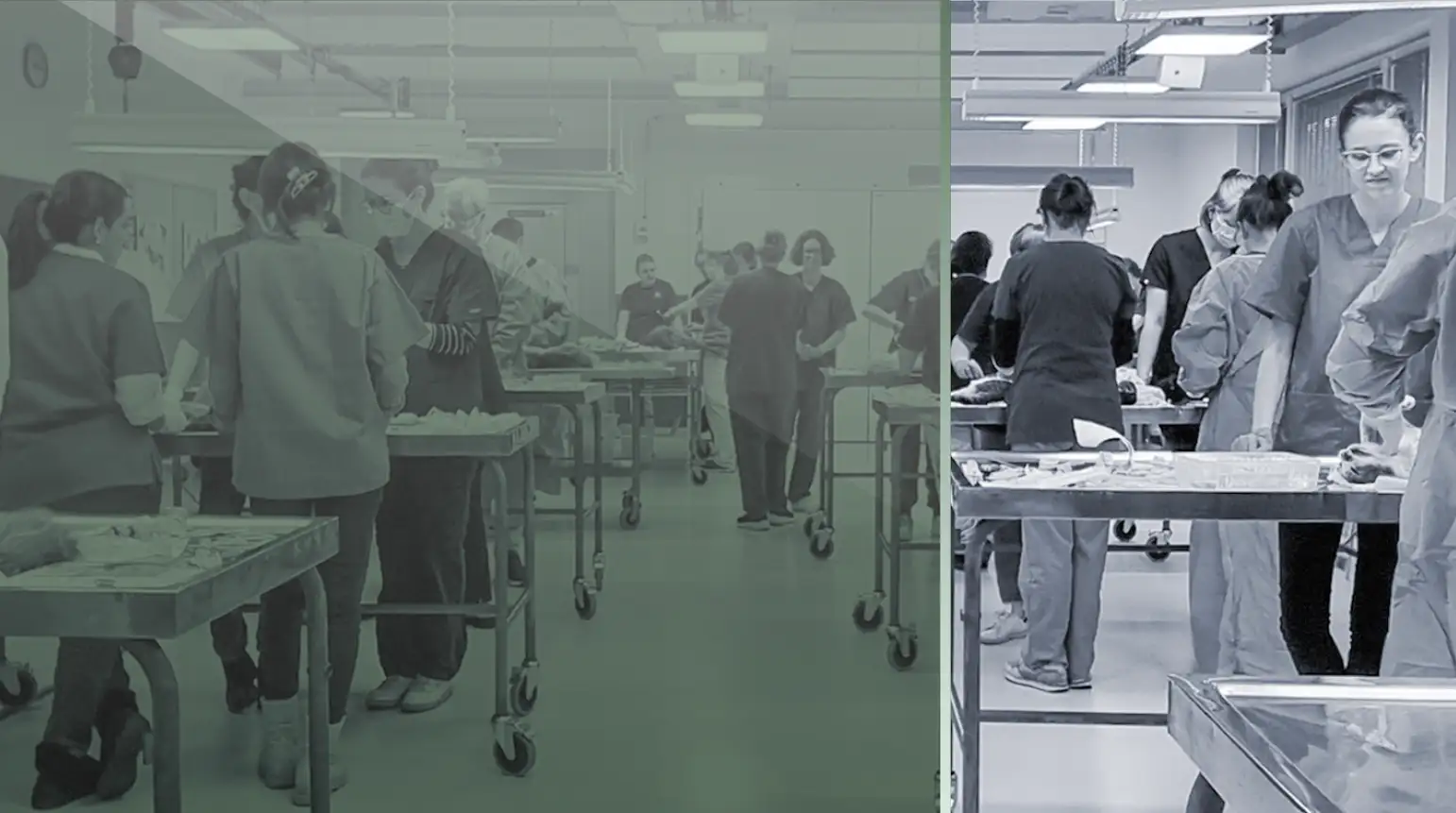
• POCUS practical laboratories
• Emergency procedure demonstrations
• Simulation-based emergency training
The course emphasizes integration of theoretical knowledge with clinical application and specialist-level emergency reasoning.
08:45 – 09:00 Introduction and welcome – Sigrist
09:00 – 10:00 Pneumonia – Sigrist
10:30 – 12:30 Pleural effusion incl. Pyothorax – Sigrist
12:30 – 13:30 Lunch Break
13:30 – 14:30 Brachycephalic airway syndrome – Sigrist
14:30 – 15:30 Tracheotomy placement and care – Sigrist
16:00 – 17:00 Pulmonary edema – Sigrist
17:00 – 17:30 Q&A
08:00 – 09:00 Identification of heart disease in the dyspneic emergency patient – Sigrist
09:00 – 10:00 Chest radiographs: heart disease – Precht
10:30 – 12:30 Heart disease in dogs – Haßdenteufel
12:30 – 13:30 Lunch Break
13:30 – 14:30 Heart disease in cats – Haßdenteufel
14:30 – 15:30 Arterial thromboembolism – Haßdenteufel
16:00 – 17:00 Case discussion heart disease – Haßdenteufel
17:00 – 17:30 Q&A
08:00 – 09:00 ECG interpretation – Haßdenteufel
09:00 – 10:00 Pulmonary Hypertension – Haßdenteufel
10:30 – 11:30 Pericardial effusion – Sigrist
11:30 – 12:30 Fluid overload – Adamik
12:30 – 13:30 Lunch Break
13:30 – 14:30 Colloids incl. human albumin – Adamik
14:30 – 17:00 Case discussion advanced fluid therapy – Sigrist & Adamik
17:00 – 17:30 Q&A
08:00 – 09:00 Hypernatremia – Sigrist
09:00 – 10:00 Hyponatremia – Sigrist
10:30 – 11:30 Cases sodium disorder – Sigrist
11:30 – 12:30 Anaphylaxis – Sigrist
12:30 – 13:30 Lunch Break
13:30 – 14:30 Introduction to point of care ultrasound (POCUS) – Guillet or Adamik
14:30 – 17:00 Practical POCUS – Adamik & Guillet
Case discussion – Sigrist
Casus case
17:00 – 17:30 Q&A
08:00 – 09:00 Transfusion I – Adamik
09:00 – 10:00 Transfusion II – Adamik
10:30 – 11:30 Transfusion III – Adamik
11:30 – 12:30 Case discussion in groups – Sigrist
12:30 – 13:30 Lunch Break
13:30 – 15:30 Presentation of cases – Sigrist & Adamik
16:00 – 17:00 Certificate information – Course closing – Sigrist
2.900
2.800
01/11/2026
40
TBA
5
* eLibrary access is included in the course fee