Dermatology I
26/01/2026 - 30/01/2026 Bangkok / Thailand
Dr. Lucia Panakova, Dipl. ECVD (SK)
Dr. Katarina Varjonen, Dipl. ECVD, MRCVS (SE)
Dr. Chiara Brachelente, DVM, PhD, Dipl. ECVP (IT)
The ESAVS Dermatology program consists of 6 one-week modules.
Dermatology courses can be taken in any order, but we recommend completing Dermatology 1 before continuing to the next courses. The course masters and tutors are Diplomates in Dermatology (ACVD/ECVD/DVD) or diplomates, specialists and University teachers in the related disciplines within the program.
In this first introductory course, the basic principles of dermatology are reviewed. First is the biology of the skin, with special attention to the mechanisms of innate and acquired skin immunity and the skin microbiome. Second, the approach to the dermatological patient and how the diagnosis is made: the problem-oriented approach (POA), the decision-making process, the adequate use of diagnostic tests and the dual-processing model. Special attention is given to cutaneous histopathology, considered the most powerful diagnostic tool among the diagnostic tests. Furthermore, the students will learn how to design effective treatment plans under the paradigm of evidence-based medicine and the principles of conservative prescription.
In the second part of the course, the main bacterial diseases of the skin will be reviewed from common diseases such as superficial bacterial folliculitis to severe and uncommon conditions such as necrotizing fasciitis. The adequate use of diagnostic techniques (cultures, molecular techniques) and the therapy for skin infections, including those caused by multi-resistant organisms will be discussed.
Learning outcomes
At the end of the course, participants will be able to:
1. Understand skin structure and function (and how different components of the skin are involved in the pathogenesis of different skin diseases).
2. Approach a dermatologic patient following the POA (history, clinical and dermatologic examination, definition of the problem(s), elaboration of an adequate differential diagnosis list).
3. Perform and interpret basic diagnostic techniques (skin scrapings, cutaneous cytologies, skin cultures, skin biopsies).
4. Diagnose and treat the most common bacterial skin diseases of the dog and cat.
Skin biology. Mechanisms of cutaneous immunity. Skin microbiome.
The approach to the dermatologic patient. History, lesion description, problem definition and use of diagnostic techniques (cytology, histopathology, molecular techniques). How a diagnosis is made (dual processing theory).
Bacterial skin infections. Bacterial folliculitis-other superficial pyodermas.
Folliculitis-furunculosis (generalized, post-grooming, German shepherd).
Other deep bacterial infections: botryomycosis, actinomycosis, nocardiosis.
Mycobacterial infections: feline leprosy, panniculitis caused by rapidly growing mycobacteria, canine leproid granuloma syndrome. Necrotizing fasciitis.
Special focus:
Understanding bacterial resistance and the MRS issue.
Wetlabs:
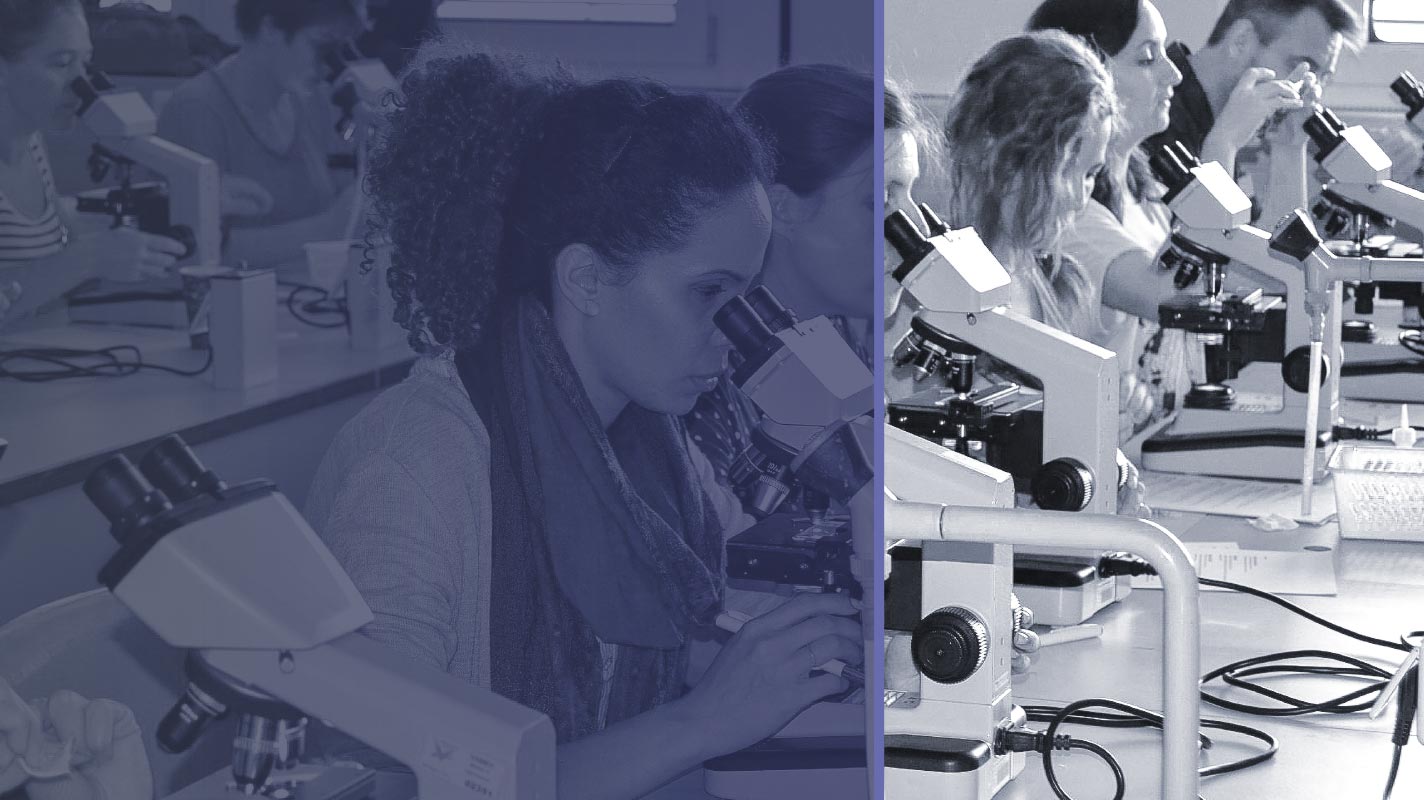
Principles of cutaneous cytology.
How to obtain useful skin biopsies.
Basic histology of the skin.
Language
All modules will be held in English.
09:00 – 09:45 Introduction: Skin biology: keratinocyte biology
09:45 – 10:30 Skin biology: basement membrane zone (BMZ)
10:30 – 11:00 Coffee Break
11:00 – 11:45 Skin biology: dermis and subcutis
11:45 – 12:30 Skin biology: hair folicles and glands
12:30 – 13:15 Skin histology (online)
13:15 – 14:30 Lunch Break
14:30 – 15:15 Skin histology (online)
15:15 – 16:00 Skin cytology part (I)
16:00 – 16:30 Coffee Break
16:30 – 17:30 Presenting a case Panakova / Varjonen
09:00 – 09:45 Immunology of the skin: innate immune response
09:45 – 10:30 Immunology of the skin: acquired immune response
10:30 – 11:00 Coffee Break
11:00 – 11:45 Approach to the dermatologic patient (I)
11:45 – 12:30 Approach to the dermatologic patient (II)
12:30 – 13:15 Examples and clinical cases
13:15 – 14:30 Lunch Break
14:30 – 15:15 How to obtain useful skin biopsies
15:15 – 16:00 Skin histology (Zoom recording)
16:00 – 16:30 Coffee Break
16:30 – 17:30 Case based discussion Panakova / Varjonen
09:00 – 09:45 Skin microbiome
09:45 – 10:30 Diagnosis of bacterial skin infections
10:30 – 11:00 Coffee Break
11:00 – 11:45 Skin cytology (II)
11:45 – 12:30 Skin cytology (III)
12:30 – 13:15 Surface & superficial bacterial dysbiosis
13:15 – 14:30 Lunch Break
14:30 – 15:15 Wet lab: skin cytology
15:15 – 16:00 Wet lab: skin cytology
16:00 – 16:30Coffee Break
16:30 – 17:30 Wet lab: skin cytology
20:00 – Social Dinner
09:00 – 09:45 Melanocytes and skin pigmentation
09:45 – 10:30 Understand bacterial resistance and the MRS issue
10:30 – 11:00 Coffee Break
11:00 – 11:45 How to interpret sensitvity in test results
11:45 – 12:30 Deep pyoderms
12:30 – 13:15 Examples and clinical cases: diagnostic approach to focal – multifocal alopecia
13:15 – 14:30 Lunch Break
14:30 – 15:15 Journal club
15:15 – 16:00 Clinical student cases
16:00 – 16:30 Coffee Break
16:30 – 17:30 Histopathology workship (onilne)
09:00 – 09:45 Mycobacterial infections
09:45 – 10:30 Other deep bacterial infections
10:30 – 11:00 Coffee Break
11:00 – 11:45 Principles of topical therapy
11:45 – 12:30 Systemic therapy in skin infections
12:30 – 13:15 Discussion of clinical cases
13:15 – 14:30 Lunch Break
14:30 – 15:15 Journal club / student cases
15:15 – 16:00 Student clinical cases
16:00 – 16:30 Coffee Break
16:30 – 17:30 Wrap up, quiz & student cases
Dermatopathology